Prettau Zirconia - Built To Last
Not All Zirconia Is The Same
What you should know about Zirconia quality in full-arch dental implants, and the questions you should ask your clinic.

What you should know about Zirconia quality in full-arch dental implants, and the questions you should ask your clinic.
Many clinics are starting to offer “Zirconia teeth.”. Which is a great thing for patients as it is the clinically proven most optimal long term prosthetic material for patients. If you want to learn more about how Zirconia compares to PMMA you can click here for a detailed breakdown.
However, very few explain which Zirconia they use, and what that means for you long term.
And that matters, because the quality of Zirconia directly affects real-world outcomes, including:
Two patients can both receive “Zirconia teeth”, and have very different experiences years later.
In full-arch implant treatment, your teeth are:
When lower-grade or inappropriate Zirconia is used for full-arch bridges, the risks increase.
That can mean:
These aren’t theoretical risks, they’re the practical consequences of using zirconia that prioritises appearance or cost over full-arch durability.
Zirconia isn’t one material. In simple terms:
In single crowns, that trade-off may be acceptable.
In full-arch bridges, it can be critical.
When strength is reduced, so is the margin for error.
This is why patients should be cautious of vague claims like:
“High-translucency Zirconia teeth”, “Premium Zirconia”, “Zirconia upgrade”
Without context, those phrases don’t tell you whether the material is actually appropriate for a full-arch implant bridge.
At New Life Teeth, our final full-arch bridges are fabricated using Prettau® Zirconia, produced by Zirkonzahn.
We use it because it is:
In practical terms, this means:
Our focus is not on using the most translucent Zirconia, it’s on using the zirconia that delivers the most reliable long-term outcome for full-arch patients.
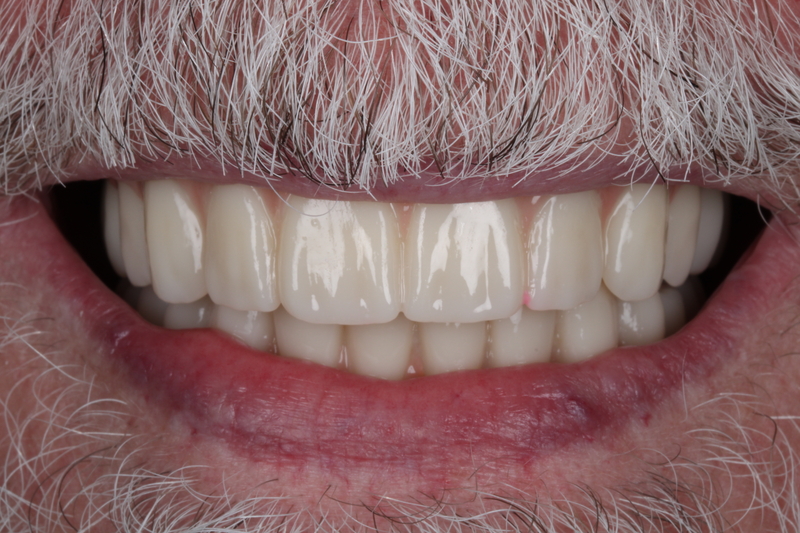

This isn’t about distrust, it’s about making an informed decision.
If a clinic cannot clearly explain:
…then you’re being asked to accept uncertainty in a treatment that’s meant to last for life.
A simple question to ask any provider is:
“What Zirconia are you using for my final teeth, and why is it suitable for a full-arch bridge?”
A clinic confident in its materials will welcome that question.
Zirconia can be an exceptional material for full-mouth dental implants, when the right Zirconia is used for the right reason.
Lower-quality or inappropriate zirconia increases the risk of fracture, fatigue, and long-term complications.
Higher-grade, full-arch–specific Zirconia improves predictability, durability, and confidence.
That difference matters, because your teeth aren’t temporary.
If you’d like, we’re happy to:
Book a Free Clinical Assessment

