Addressing the “Zirconia Is Too Hard” Topic in Full Arch Restorations

Accessibility option:
For those who prefer listening or have difficulty reading, an audio version of this page is available below. You may adjust the playback speed by pressing the 3 dots on the right hand side of the player.

What follows is a detailed, research-backed comparison of ceramic (zirconia) and acrylic (PMMA) full-arch prosthetics, including key findings from a landmark 6-year clinical study, demonstrating why zirconia remains a safe, effective, and often superior choice for long-term implant health.

Unfortunately it’s not uncommon to encounter misinformation designed to create uncertainty. A common example is the claim that zirconia teeth are “too hard” and lead to excessive bone loss in full-arch implant restorations.

We understand that information coming from any clinic can be hard to trust. That is why all information presented on this page is grounded in clinical data and peer-reviewed research, rather than anecdotal experience.

We hope that you can take this information, and do your own research to come to your own educated opinion.

As an associated Brånemark Centre and one of the leading implant clinics in the UK and Ireland, we are committed to providing clear, evidence-based guidance. If you have any trouble understanding this information, please reach out to us and we are happy to help.

Understanding the Concern: Zirconia Hardness vs. Natural Tooth PDL

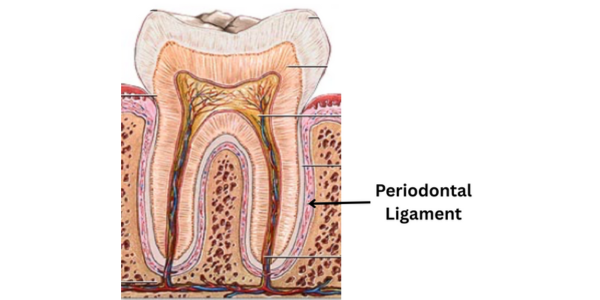
Patients may hear the claim that “zirconia teeth are too hard” and worry this could cause damage or bone loss when used in full arch restorations. This concern stems from the difference between natural teeth and implants: natural teeth are cushioned by the periodontal ligament (PDL), which acts as a shock absorber and provides sensory feedback, whereas dental implants are rigidly anchored to bone with no PDL for cushioning[1][2]

In natural teeth, the PDL allows physiologic mobility and distributes forces, but implants lack this mechanism, potentially concentrating stress at the bone interface[1]. It has been proposed that using softer, more elastic materials (like acrylic / PMMA) for implant restorations might simulate the shock-absorbing function of the PDL and reduce force on the bone[3]

In theory, an acrylic (PMMA) prosthesis could cushion occlusal forces better than a very hard ceramic like zirconia. This is the basis of the claim that zirconia’s hardness might be “too much” for implants without a PDL. 

However, as we will explain, current clinical evidence does not support the notion that zirconia’s hardness causes harmful bone loss. In fact, long-term studies indicate the opposite – zirconia restorations can maintain bone levels as well as or better than acrylic, largely due to differences in plaque accumulation and inflammation rather than force alone.

Material Differences: Zirconia vs. Acrylic (PMMA) in Implant Prosthetics


Understanding the material properties of zirconia and acrylic helps clarify their effects on implants and surrounding tissues:

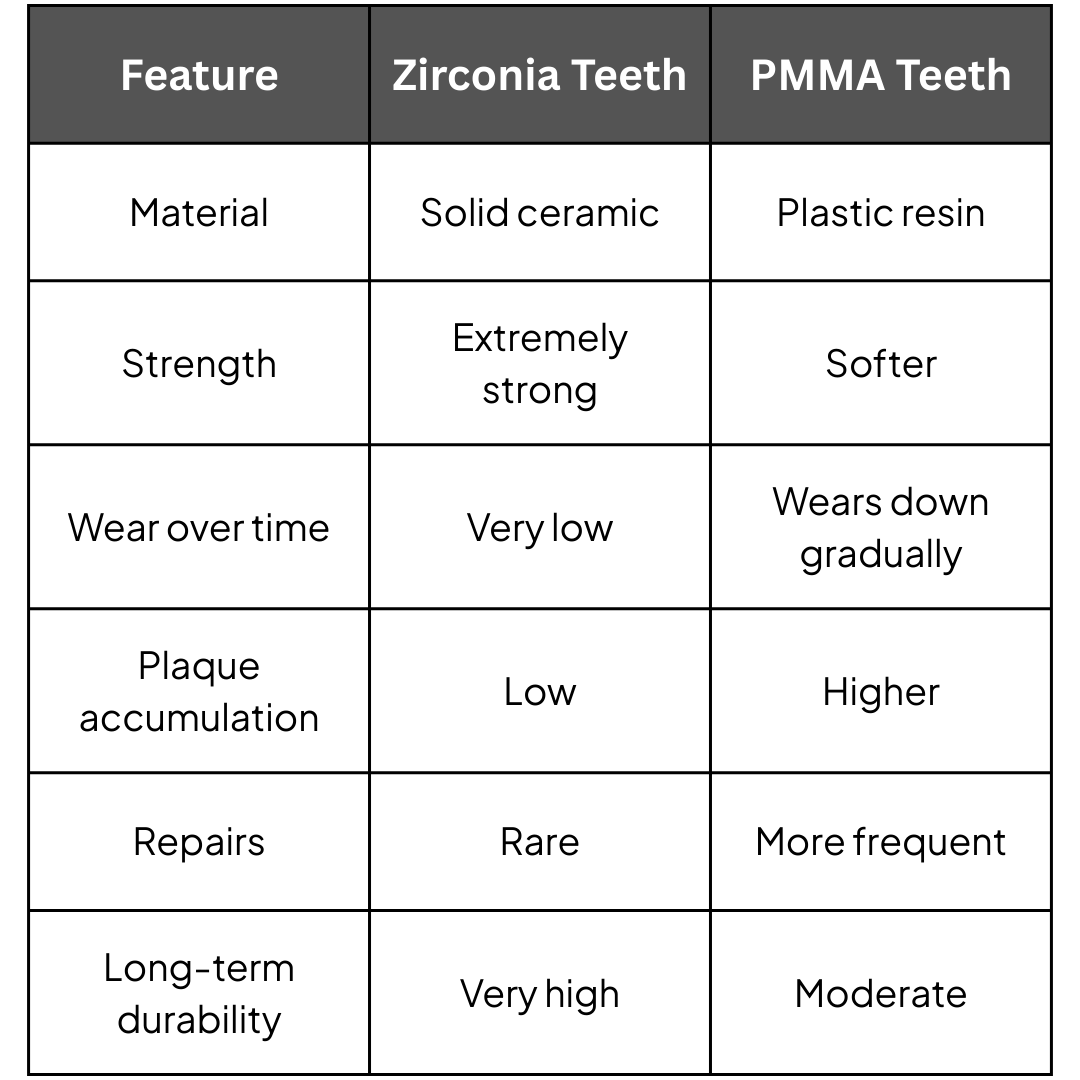
  • Hardness and Strength: Zirconia is an extremely hard, high-strength ceramic (often touted as 8–10 times stronger than acrylic resin by mechanical tests). It resists fractures and wear, maintaining a stable biting surface over time. Acrylic resin (PMMA), by contrast, is a softer polymer-based material that wears down more easily and can chip or break under force. Laboratory studies confirm that acrylic materials can absorb occlusal shock more than ceramic or zirconia[4]. In other words, an acrylic prosthetic can slightly dampen forces to some degree (acting as a “shock absorber”), whereas a zirconia prosthesis will transmit more force directly to the implant. This shock absorption property of acrylic has been cited as a potential advantage to protect implants in heavy bites. However, the trade-off is that acrylic’s softness leads to faster wear and frequent repairs or replacements, whereas zirconia’s rigidity provides a long-lasting, stable occlusion[3]. Notably, a classic review pointed out that while softer occlusal materials (acrylic) may reduce impact forces, they also tend to wear and fracture frequently, requiring more maintenance, whereas harder materials like metal or ceramic offer more long-term stability[2].
  • Surface and Plaque Accumulation: A critical difference between acrylic and zirconia is how they interact with oral hygiene. Acrylic resin is more porous and has a higher surface roughness compared to the glass-smooth surface of polished zirconia[5]. This means acrylic restorations tend to attract and retain more dental plaque (bacterial biofilm). Studies have shown that acrylic materials have a greater affinity for biofilm formation, leading to increased inflammation in the gums around implants[5]. Zirconia, being non-porous and smoother, is more resistant to plaque accumulation[5]. Clinically, this difference is very important: plaque-induced inflammation (peri-implant mucositis or peri-implantitis) is a major cause of bone loss around implants, often more so than mechanical stress. In fact, research has found that the higher plaque and inflammation levels associated with acrylic prostheses correlate with greater bone resorption around implants[5]. Simply put, zirconia’s smooth, inert surface tends to stay cleaner, supporting healthier peri-implant tissues.
  • Durability and Maintenance: Because acrylic is softer, full-arch bridges made of acrylic (usually acrylic teeth on a metal framework) will wear down and discolour over time. They often require periodic replacement or relining after several years of service. Zirconia bridges are far more resistant to chewing wear, do not stain easily, and have been shown to have excellent long-term survival. For example, one source notes monolithic zirconia full-arch implant prostheses demonstrated a >95% survival rate over 10 years[6]. Acrylic hybrids, while cheaper initially, may need replacement of teeth or repairs every 5–7 years[7]. Additionally, acrylic’s porosity means it can harbour odours or bacteria if not cleaned meticulously[8][9]. Zirconia’s density and custom-milled fit allow a more streamlined design (less bulky) and make it easier to keep clean, which benefits gum health in the long run[8][10].

In summary, zirconia offers superior strength, stability, and hygiene, while acrylic offers shock absorbance at the cost of higher plaque retention and maintenance needs. The key question is: do these differences translate into differences in bone preservation around implants? The answer lies in clinical studies.

Clinical Evidence on Bone Loss: Zirconia (ceramic) vs. PMMA (acrylic) Prosthetics

To directly address the claim that zirconia causes more bone loss, we turn to peer-reviewed clinical research comparing implant restorations made of zirconia (ceramic) versus acrylic resin (PMMA). One of the most relevant studies is a 6-year clinical trial of full-arch implant bridges (All-on-4 concept in the upper jaw) comparing PMMA vs. Zirconia superstructures[11]. The study followed 34 edentulous patients (17 with zirconia-based fixed prostheses and 17 with acrylic-based prostheses on identical implant frameworks) over six years, monitoring their implant success, marginal bone loss, plaque levels, and other parameters[11]. The findings provide strong, long-term evidence on this issue:

  • Bone Loss Results (6-Year Study): Both groups of patients had successful implant integration after 6 years, but the amount of bone loss around the implants differed significantly. The zirconia (ceramic) group showed an average of only about 1.4 mm of marginal bone loss over six years, which was well within accepted success thresholds[12]. In contrast, the acrylic group experienced roughly 2.1 mm of bone loss on average in the same period[12]. This difference was statistically significant (p≈0.00), meaning the acrylic restorations were associated with significantly more bone loss than the zirconia restorations[12]. Importantly, the bone loss in the zirconia group remained “within the limits for ‘success’” defined by implant success criteria, whereas the acrylic group’s bone loss, while not catastrophic, was notably higher[12]. In practical terms, all patients kept their implants healthy, but those with acrylic teeth had about 50% more bone reduction on average compared to those with zirconia teeth over the 6-year span.
  • Plaque and Inflammation: The same 6-year study found a clear correlation between the type of material and peri-implant health measures. Plaque indices and bleeding on probing were significantly higher in the acrylic group, indicating more plaque buildup and gum inflammation around those implants[13]. These inflammatory markers corresponded with the greater bone loss observed in the acrylic group[14]. The ceramic/zirconia group, with its smoother surfaces, had lower plaque accumulation and accordingly less inflammation and bone change[15]. The authors explicitly note that acrylic’s tendency to attract biofilm likely led to increased inflammatory bone resorption in that group[5][15]. This supports the idea that biology (plaque and inflammation) plays a larger role in bone maintenance than the mechanical hardness of the material.
  • Prosthetic Maintenance and Complications: Over the 6 years, both groups had few major prosthetic issues, but there were differences in maintenance. The study reported generally equivalent overall prosthetic success in terms of function – both types of teeth “appeared to be equivalent after 6 years” in patient satisfaction and function[16]. However, from a clinical standpoint the ceramic superstructures performed better, with “superior clinical results in terms of less bone loss and plaque accumulation” compared to acrylic[16]. All implants in both groups survived (100% survival rate) over the six years[17], indicating that with proper care both materials can be used successfully without implant failure. Yet the difference in bone level changes and hygiene metrics clearly favored zirconia in this long-term comparison.

This 6-year study is not alone. Additional research echoes these findings:

  • 7-Year Mandible Study: A similar comparative study looked at full-arch implants in the lower jaw (mandible) over 7 years, comparing metal-ceramic bridges to acrylic (metal-acrylic) bridges. It found no difference in implant survival or bone loss between ceramic and acrylic groups in that timeframe, but did report higher plaque accumulation around the acrylic prostheses[18]. In other words, even when bone loss ended up similar, the acrylic group had worse gum health indicators, suggesting they required more diligent hygiene to avoid future problems[19]. The authors of that study advised that patients with acrylic restorations must be highly motivated in oral hygiene due to the material’s tendency to collect plaque[20].
  • Retrospective 5-Year Data (Chochlidakis et al. 2022): In a retrospective analysis of patients with full-arch implant-fixed prostheses (often referred to as “implant dentures” or fixed hybrid bridges), researchers compared outcomes for metal-acrylic vs. metal-ceramic prostheses over an average of 5 years. Consistent with other studies, they found no implant failures attributable to the prosthetic material – implant survival was ~100% in both groups. However, biologic complications were clearly more frequent with acrylic (metal-resin) prostheses. Specifically, soft tissue hypertrophy (overgrowth of gum tissue around implants) was 2.8 times more likely around metal-acrylic resin prostheses, and plaque accumulation was significantly higher compared to metal-ceramic prostheses[21][22]. The authors concluded succinctly: “Biologic complications such as soft tissue hypertrophy and plaque accumulation were more often associated with metal-acrylic resin prostheses.”[22]. This reinforces that from a biological health perspective, zirconia/ceramic options tend to be kinder to the gums and bone over time.
  • Other Considerations: It’s worth noting that in all these studies, mechanical overload (excess force) was not reported as a cause of implant problems in the zirconia groups. If the “zirconia is too hard” argument were true in a clinically significant way, one might expect to see more implant failures or bone loss in those patients due to overload. On the contrary, implant success was 100% and bone loss minimal in the zirconia groups of long-term studies[17]. Proper case planning (ensuring implants are placed in good positions and that the bite forces are evenly distributed) is critical regardless of material. With well-designed prosthetics, the rigid zirconia bridges did not cause any abnormal bone resorption. In fact, any occlusal force differences between materials appear overshadowed by the differences in inflammation. Patients in zirconia groups maintained healthy bone as long as they had good oral hygiene and regular follow-ups – just as one would expect for any implant patient.

Dispelling the Myth: Key Takeaways

To directly answer the concern: Does zirconia’s hardness (in the absence of a PDL) cause increased bone loss around implants? The evidence indicates no – zirconia restorations are not causing pathological bone loss, and in many respects they outperform acrylic restorations in maintaining peri-implant bone levels. Here are the key points, supported by clinical findings:

  • Bone Loss: Long-term clinical comparisons show equal or less bone loss with zirconia prostheses vs. acrylic. In a 6-year maxillary implant study, the zirconia group had roughly one-third less marginal bone loss than the acrylic group[12]. Both remained within acceptable limits, but acrylic’s higher bone loss was statistically worse[12]. No evidence has emerged of excess bone loss uniquely attributable to zirconia’s stiffness under normal conditions.
  • Plaque and Inflammation: Zirconia’s smooth surface leads to lower plaque accumulation, whereas acrylic’s roughness encourages plaque. Consequently, acrylic prostheses see more gum inflammation (bleeding, swelling) which is a known precursor to bone loss[5][22]. Managing inflammation is crucial: the “zirconia vs. acrylic” choice can influence how easy it is to keep implants clean. Zirconia makes it easier to maintain healthy gums, which protects bone.
  • Mechanical Stress vs. Biology: While acrylic can cushion some force, there is no clinical proof that using acrylic instead of zirconia prevents bone loss due to “shock absorption.” In fact, extensive research suggests biologic factors (hygiene and tissue response) are more impactful on long-term bone stability than minor differences in shock absorption under normal function. Overloading implants can indeed cause bone loss, but this is typically addressed by proper implant placement, correct occlusal adjustment, and for high-risk cases, maybe night guards for bruxism. Simply choosing a softer prosthetic material is not a reliable solution for overload in itself – especially if it compromises hygiene. As one review noted, soft “shock-absorbing” materials like acrylic may reduce impact, but they introduce other issues (wear, frequent repairs) and do not eliminate the need for careful force management[3]. Meanwhile, zirconia’s rigidity has not been shown to harm well-integrated implants when managed properly.
  • Clinical Success and Patient Outcomes: Both materials can be used successfully in implant dentistry, but zirconia is increasingly favored for full-arch restorations because of its durability and tissue-friendliness. Clinical outcome studies and patient satisfaction surveys generally find comparable or better results with zirconia. For instance, after 5–6 years patients with zirconia and acrylic bridges report similar function and aesthetics, but the zirconia groups tend to experience fewer biologic complications and prosthesis maintenance events[16][22]. The peace of mind of having a more permanent solution (zirconia) that won’t wear out, combined with the health benefit of lower plaque, makes zirconia an attractive “gold standard” for many implant centers.

Conclusion: Evidence Trumps Myth

The narrative that “zirconia teeth are too hard and cause bone loss due to lack of PDL” is not supported by scientific evidence. On the contrary, peer-reviewed clinical studies indicate that zirconia-based implant restorations can preserve bone as well as or better than acrylic-based restorations over time[12][16]. The primary driver of long-term implant bone loss is inflammation from bacterial plaque, and in this regard zirconia’s smooth, biocompatible surface offers an advantage by accumulating less plaque and causing less gum irritation[5][22]. Acrylic restorations, while somewhat more forgiving in shock absorption, come with the downsides of increased plaque retention, more maintenance, and material wear.

In practical terms, a well-designed zirconia prosthesis on implants provides strong, stable function and maintains healthy bone, provided that the patient maintains good oral hygiene and the occlusion is properly adjusted. Modern implant dentistry has embraced zirconia for full-arch treatments (such as the All-on-4 concept) precisely because of these long-term benefits. As the 6-year clinical comparison concluded, “ceramic superstructures revealed superior clinical results in terms of less bone loss and plaque accumulation” than acrylic alternatives[16]. Patients can therefore be confident that choosing a zirconia final bridge is not “too hard” on their implants – it is a scientifically validated, high-performance choice that, coupled with good care, will support the health of the implants and surrounding bone for many years.

Clinical & Peer Reviewed Sources:

  • Ayna M. et al. (2021). Odontology, 109(4):930-940 – Six-year clinical outcomes of implant-supported acrylic vs. ceramic full-arch prostheses (All-on-4 in edentulous maxilla)[12][5].
  • Chochlidakis K. et al. (2022). J Prosthet Dent, 128(3):375-381 – 5-year retrospective study on biologic complications in full-arch implant prostheses (zirconia vs. acrylic)[23].
  • Bencharit S. et al. (1997). Chula Dent J, 20(2):121-126 – Review of shock-absorbing concepts in implants (PDL vs. implant, material considerations)[1][3].
  • Menini M. et al. (2023). Dent. J. 12(4):111 – In vitro study on shock absorption of implant prosthetic materials (polymers vs. ceramics)[4].
  • (Additional context from contemporary implant dentistry texts and clinical reports as cited above.)

[1] [2] [3]  "Shock-absorbing concepts for osseointegrated prostheses" by Sompop Bencharit, Root Chumdermpadetsuk et al. 

https://digital.car.chula.ac.th/cudj/vol20/iss2/8/

[4] Shock Absorption Capacity of High-Performance Polymers for Dental Implant-Supported Restorations: In Vitro Study

https://www.mdpi.com/2304-6767/12/4/111

[5] [11] [12] [13] [14] [15] [16] [17] [18] [19] [20]  Six-year clinical outcomes of implant-supported acrylic vs. ceramic superstructures according to the All-on-4 treatment concept for the rehabilitation of the edentulous maxilla - PMC 

https://pmc.ncbi.nlm.nih.gov/articles/PMC8387254/

[6] [7] [8] [9] [10] Zirconia vs. Acrylic Teeth: Which Material Is Best for Your All-on-X Implants?

https://stubbsdental.com/blog/zirconia-vs.-acrylic-teeth-which-material-is-best-for-your-all-on-x-implants

[21] [22] [23] Implant survival and biologic complications of implant fixed complete dental prostheses: An up to 5-year retrospective study - PubMed

https://pubmed.ncbi.nlm.nih.gov/33618859/